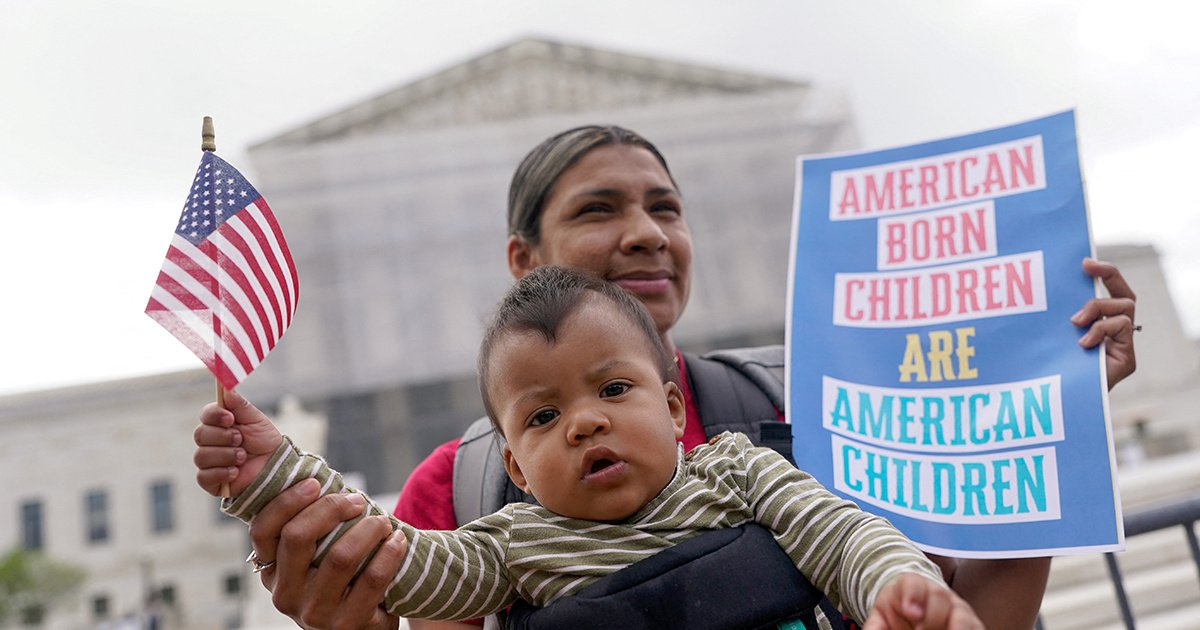
Born America! Belong America?
Within hours of his inauguration, President Donald Trump signed an executive order that would withhold U.S. citizenship from the children of some immigrants born in the United States, calling the order a “big one.” The executive order would end a right that the U.S. Constitution has guaranteed for more than 150 years. Trump’s executive order states that children born to parents in the United States illegally or on temporary visas would not automatically receive citizenship – a significant reinterpretation of the 14th Amendment to the Constitution.
His administration has argued that the 14th Amendment, passed in the aftermath of the Civil War, was intended to address the rights of formerly enslaved people, not the children of undocumented immigrants or temporary visitors to the U.S.
What Is Birthright Citizenship?
The clause has long Birthright citizenship is enshrined in the 14th Amendment, ratified in 1868 in the wake of the Civil War to ensure citizenship for formerly enslaved people. It states, “All persons born or naturalized in the United States, and subject to the jurisdiction thereof, are citizens of the United States."
been interpreted to mean that anyone born on US soil is a citizen-regardless of their parents’ immigration status. This interpretation was affirmed by the Supreme Court in 1898 in United States v. Wong Kim Ark, which ruled in favor of a man born in San Francisco to Chinese immigrant parents who were denied reentry after traveling abroad.
Scope: Applies to individuals born in the U.S. or its territories (e.g., Puerto Rico, Guam, U.S. Virgin Islands). Exceptions include children of foreign diplomats or those born to parents under hostile occupation, as they are not "subject to the jurisdiction" of the U.S.
Historical Context: Established post-Civil War to ensure citizenship for freed slaves and their descendants. The 1898 Supreme Court case United States v. Wong Kim Ark confirmed that children of non-citizen immigrants born on U.S. soil are citizens.
Current Status: The U.S. is one of about 35 countries globally with unrestricted birthright citizenship. It’s a cornerstone of U.S. immigration policy but has sparked debates, particularly over "birth tourism" and undocumented immigration.
Controversies: Some argue it incentivizes illegal immigration or exploitation (e.g., parents entering the U.S. to secure citizenship for their children). Others defend it as a fundamental American value promoting equality and opportunity.
Attempts to Change: Proposals to end or limit birthright citizenship (e.g., via executive action or legislation) have surfaced, notably during the Trump administration, but face significant legal hurdles. Amending the Constitution requires a two-thirds vote in Congress and ratification by three-fourths of states, making changes unlikely. Statutory reinterpretations are also legally contentious, as the Fourteenth Amendment’s language is clear.
What is Donald Trump’s hardline push?
Mr. President’s January executive order, one of the boldest moves in his continued immigration crackdown, reinterprets the phrase “subject to the jurisdiction thereof" to argue that children of undocumented or temporary immigrants should not be granted automatic citizenship. He and his allies have long claimed that the current interpretation creates a “magnet for illegal immigration" and needs to be undone.
Trump’s order directs federal agencies to refuse to recognize the citizenship of U.S.-born children who do not have at least one parent who is an American citizen or lawful permanent resident, also known as a “green card” holder. More than 150,000 newborns would be denied citizenship annually if Trump’s order takes effect nationally, according to the plaintiffs in various cases challenging it.
Trump VS Parents:
A New Hampshire judge approved a class action lawsuit against Trump's executive order, and temporarily stopped the president's order from taking effect.
Judge Joseph Laplante paused Trump's birthright citizenship order, “This is a blatantly unconstitutional order," US District Judge John Coughenour said during earlier proceedings, adding, “I’ve been on the bench for over four decades. I can’t remember another case where the question presented was as clear as this one." The class action lawsuit was brought by the American Civil Liberties Union on behalf of immigrant parents and their infants.
The ruling sets up a likely constitutional showdown at the Supreme Court- just weeks after the high court limited the ability of lower courts to issue sweeping nationwide injunctions without resolving the constitutional question at hand. However, the decision still allows them through certain legal avenues.
White House spokesperson Harrison Fields in a statement called the ruling “an obvious and unlawful attempt to circumvent the Supreme Court’s clear order against universal relief.”
“This judge’s decision disregards the rule of law by abusing class action certification procedures,” he said. “The Trump administration will be fighting vigorously against the attempts of these rogue district court judges to impede the policies President Trump was elected to implement.”
Vipul View:
The Department of Justice is expected to appeal the New Hampshire ruling swiftly. With class certification now in place, the case is positioned to move toward the US Supreme Court, which may ultimately decide whether Donald Trump’s executive order can stand.
If the challenges to the executive order are unsuccessful, it could lead to uneven citizenship rules across the US, potentially affecting thousands of children annually and creating legal and social uncertainties.